Case Study - Open-Source AI Context Toolkit – Squick
An open-source toolkit that pre-computes structured project context for AI coding agents, eliminating repeated token-expensive codebase scans on every prompt.
- Client
- Squick
- Year
- Service
- Open-Source Tooling · AI Infrastructure · Developer Tools
Overview
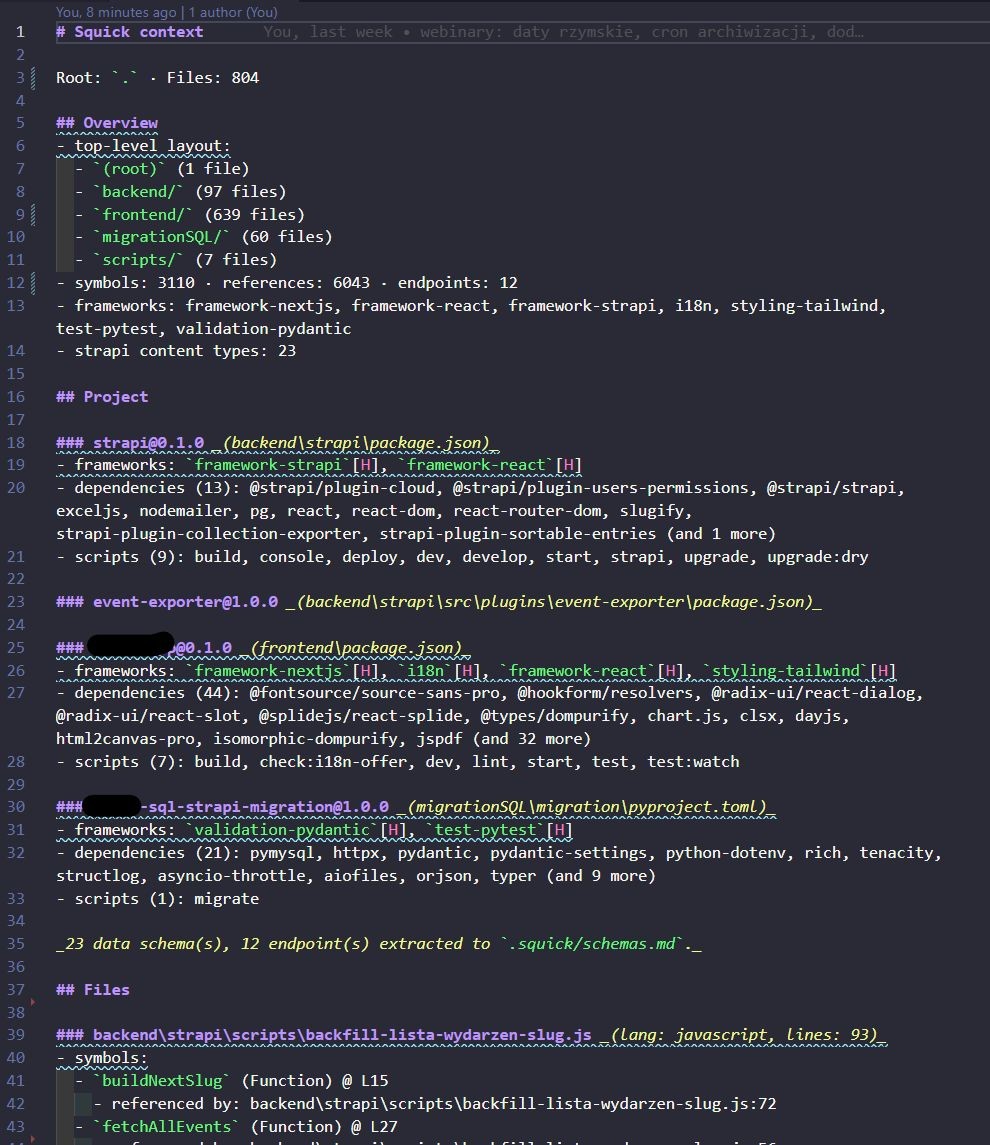
Squick is an open-source toolkit built and maintained by Horizon LLC that solves a concrete problem in AI-assisted development: every time a developer starts a new conversation with an AI coding agent, the agent re-scans the codebase to understand what it is working with. That scan is slow, token-expensive, and produces inconsistent results.
Squick replaces that step with a single deterministic pre-computation. Run it once, and it writes a small set of structured artifacts into .squick/. Any MCP-aware host — Claude Code, Cursor, Cline, Continue, Zed — reads those artifacts in place of scanning the codebase on every prompt.
What we built
The scanner parses native ASTs in five languages via official Tree-sitter grammars: TypeScript, TSX, JavaScript, JSX, and Python. For each file it extracts declared symbols, import specifiers, JSX component usages, doc comments, and call sites for cross-file reference resolution.
Framework detection ships with fourteen dictionaries covering more than 290 patterns. The matcher operates across six surfaces — filenames, path segments, imports, symbol names, component names, route literals — with calibrated confidence levels.
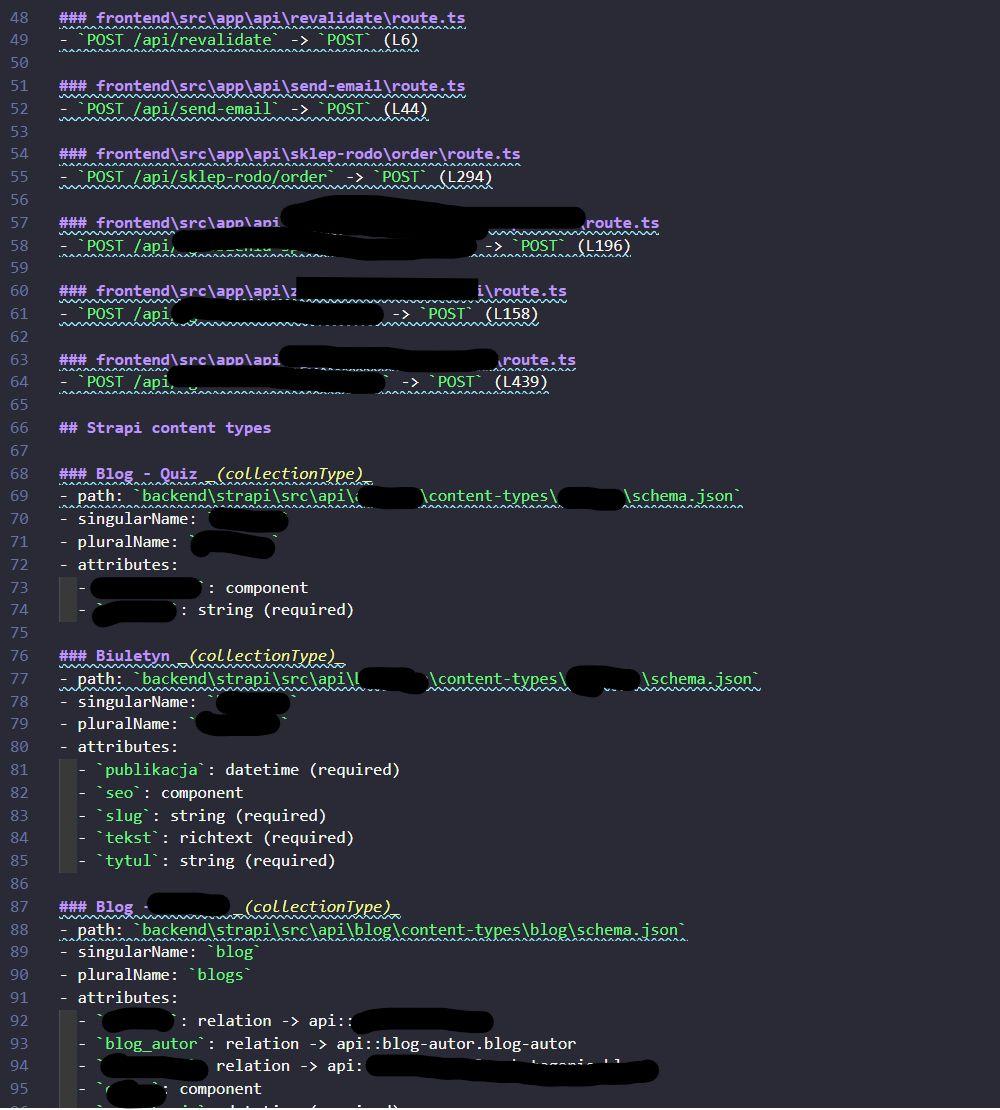
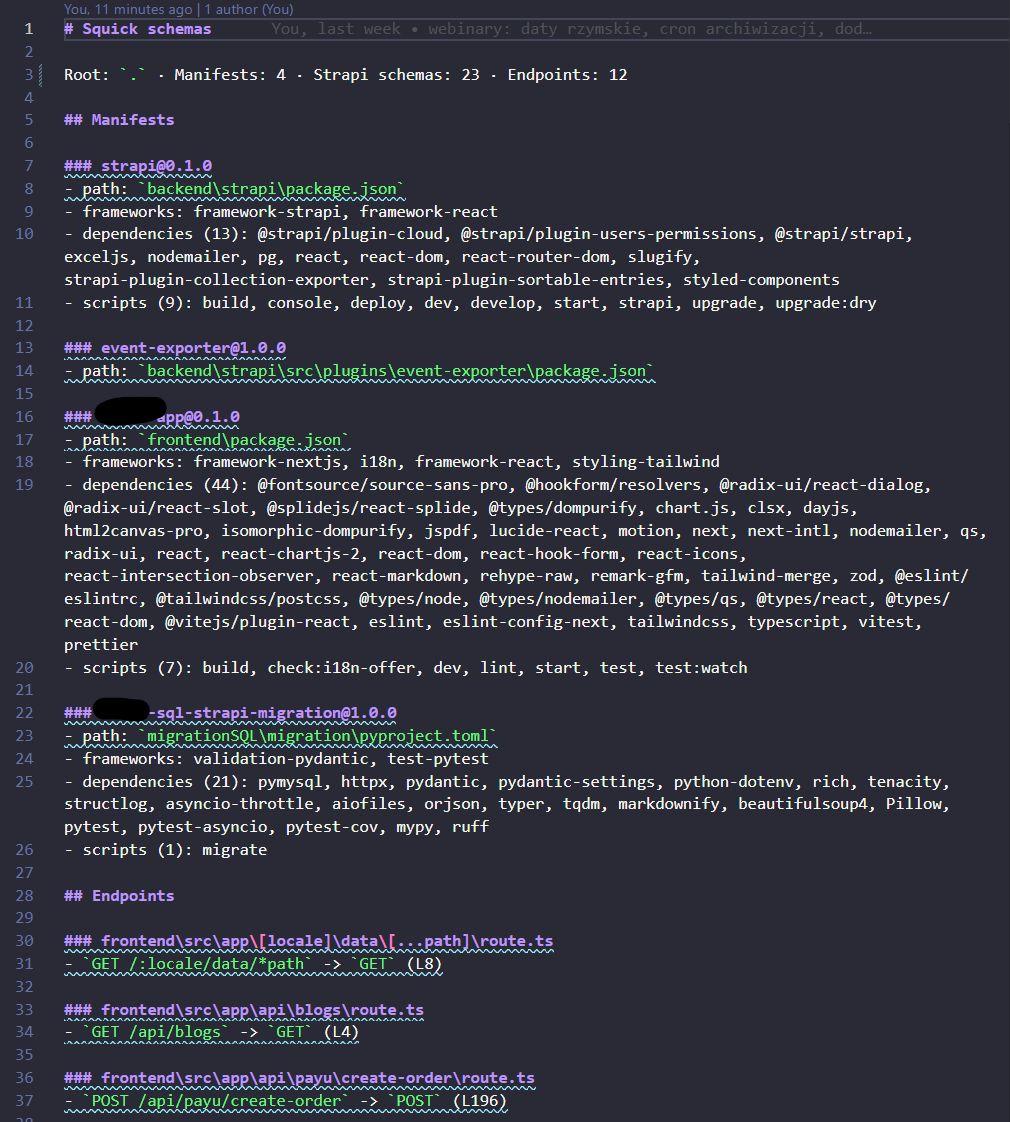
HTTP endpoint detection normalizes four declaration styles (Python decorators, Django urlpatterns, JavaScript member calls, Next.js App Router exports) into a single method/path/handler representation. Strapi schema extraction serializes a 23-content-type backend into approximately 14 KB of structured schemas.md.
A second pass builds a cross-file reference graph. On a real-world Next.js + Strapi monorepo it resolves 6,043 references in under two seconds.
MCP integration
Squick runs as a local Model Context Protocol server (squick mcp) on stdio, built on the official rmcp Rust SDK. Seven tools expose conventions, schemas, endpoints, file-level context, structured NDJSON facts, and an RDF-style triple graph to any MCP-aware client.
Distribution
Published simultaneously to npm (@hubhorizonllc/squick), PyPI (squick), crates.io (squick-cli), and GitHub Releases with pre-built binaries for Linux x86_64, Linux aarch64, macOS x86_64, macOS aarch64, and Windows x86_64. Four GitHub Actions workflows handle the full release matrix on every SemVer tag.
Result
A complete scan of a 2,780-file production Next.js + Strapi monorepo completes in approximately 1.5 seconds and produces context files that fit comfortably inside any LLM context window — distributed as Apache 2.0 open-source software.